Author name: Sourabh Damani

Piles

Piles (Hemorrhoids): Symptoms, Causes and Treatment Explained

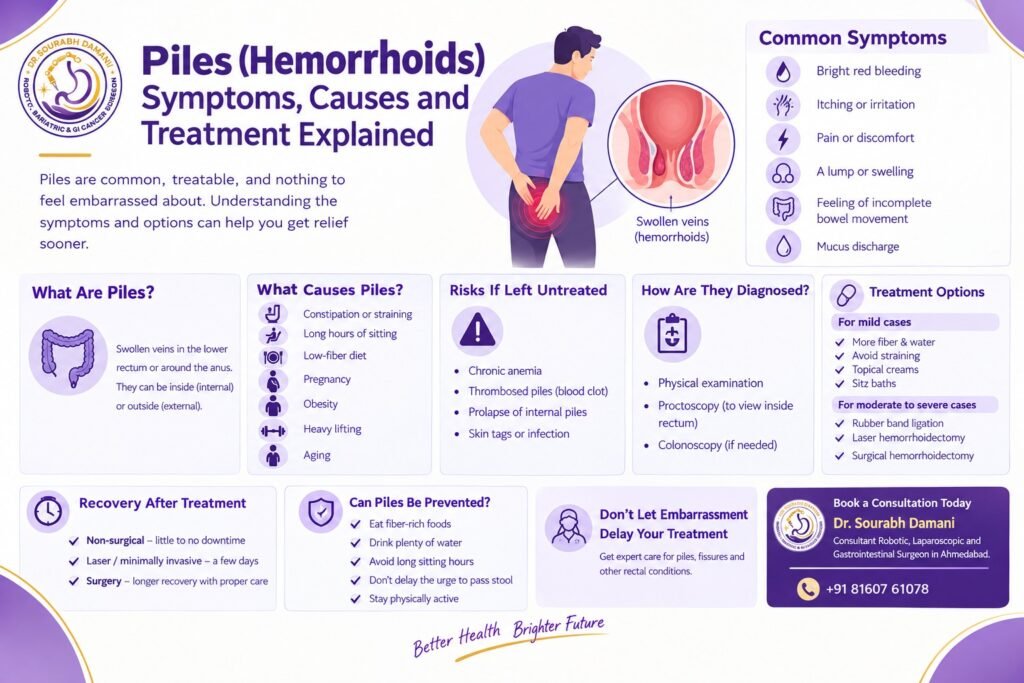
Piles (Hemorrhoids): Symptoms, Causes and Treatment Explained Introduction Piles, also known as hemorrhoids, are one of the most common yet least talked about health problems. Many people feel embarrassed to discuss it and end up ignoring the symptoms for months, or even years. But piles are highly treatable, and understanding the condition is the first step toward relief. What Are Piles? Piles are swollen veins in the lower rectum or around the anus, similar to varicose veins. They can develop inside the rectum (internal piles) or under the skin around the anus (external piles). While uncomfortable, piles are rarely a sign of anything serious, but they should still be evaluated by a doctor. What Are the Common Symptoms of Piles? Symptoms often depend on whether the piles are internal or external, but generally include: Bright red bleeding during or after passing stool Itching or irritation around the anus Pain or discomfort, especially while sitting A lump or swelling near the anus A feeling of incomplete bowel movement Mucus discharge after passing stool What Causes Piles to Develop? Piles are usually caused by increased pressure in the lower rectum. Common contributing factors include: Chronic constipation or straining during bowel movements Sitting for long hours, especially on hard surfaces A low-fiber diet Pregnancy Obesity Heavy lifting Aging, which weakens supporting tissue How Serious Can Piles Get If Left Untreated? While piles themselves are not dangerous, ignoring them can lead to complications such as: Chronic anemia due to repeated bleeding Thrombosed piles, which cause severe pain due to a blood clot Prolapse, where internal piles push out of the anus Skin tags or infection around the anal area If bleeding continues or pain worsens, it’s important to get an evaluation rather than assume it will resolve on its own. How Are Piles Diagnosed? Diagnosis is usually straightforward and can involve: A physical examination A proctoscopy, where a small instrument is used to view the inside of the rectum In some cases, a colonoscopy, especially if bleeding needs to be investigated further to rule out other causes What Are the Treatment Options for Piles? Treatment depends on the severity of the condition:For mild cases: Increasing fiber intake and water consumption Avoiding straining during bowel movements Topical creams or ointments for symptom relief Sitz baths for comfort For moderate to severe cases: Rubber band ligation – a non-surgical procedure where a small band cuts off blood supply to the pile, causing it to shrink Laser hemorrhoidectomy – a minimally invasive procedure with less pain and faster healing Surgical hemorrhoidectomy – recommended for large or prolapsed piles that don’t respond to other treatments What Does Recovery Look Like After Piles Treatment? Recovery depends on the type of procedure: Non-surgical treatments usually require little to no downtime Laser and minimally invasive procedures typically allow return to normal activity within a few days Traditional surgery may need slightly longer recovery, with proper diet and care to avoid constipation Can Piles Be Prevented? Simple lifestyle changes can go a long way in preventing piles or stopping them from getting worse: Eat a fiber-rich diet with fruits, vegetables, and whole grains Drink plenty of water Avoid sitting for prolonged periods Don’t delay the urge to pass stool Stay physically active Don’t Let Embarrassment Delay Your Treatment Piles are common, treatable, and nothing to feel embarrassed about. The longer you wait, the more uncomfortable the condition can become. Dr. Sourabh Damani provides expert evaluation and advanced treatment for piles, fissures, and other rectal and anal canal conditions in Ahmedabad. Book a confidential consultation today to get the relief you deserve.
Bariatric

Bariatric Surgery for Weight Loss: Is It Right for You?

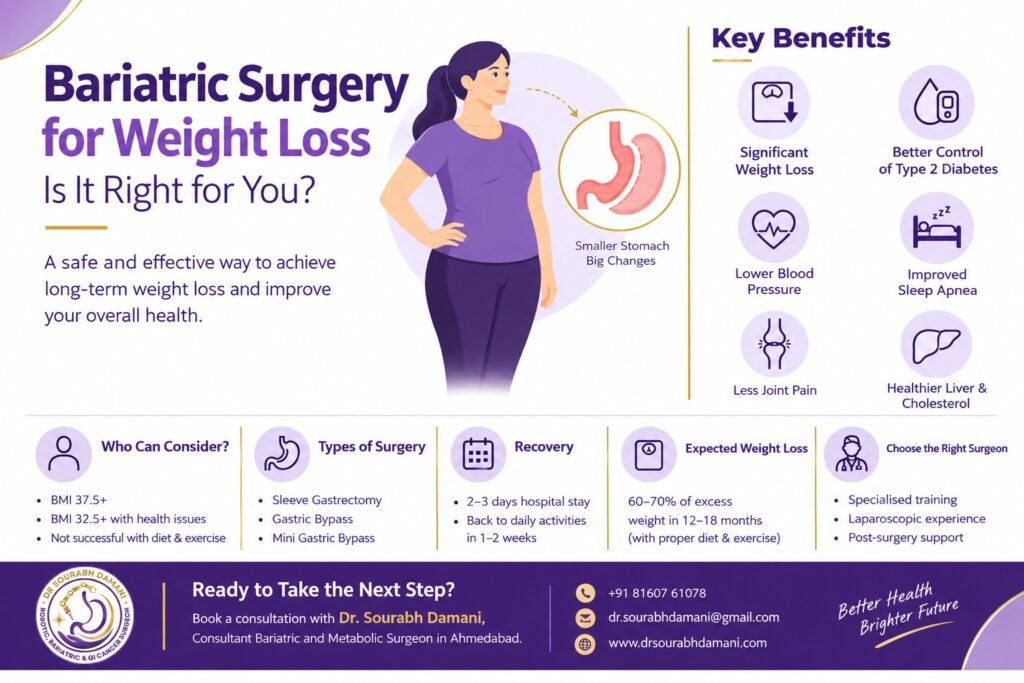
Bariatric Surgery for Weight Loss: Is It Right for You? Introduction If you’ve tried diets, exercise, and medications without lasting results, you’re not alone. Obesity is a complex medical condition, not just a lifestyle issue, and for many people, bariatric surgery becomes the most effective and safe option to achieve long-term weight loss. Here’s what you need to know before considering it. What Is Bariatric Surgery? Bariatric surgery, also called weight loss surgery or metabolic surgery, involves making changes to the digestive system to help a person lose weight. It works by either reducing the size of the stomach, limiting the amount of food you can eat, or changing how your body absorbs nutrients, sometimes both. Who Should Consider Bariatric Surgery? Bariatric surgery is generally recommended for people who: Have a Body Mass Index (BMI) of 37.5 or higher Have a BMI of 32.5 or higher, along with obesity-related conditions like type 2 diabetes, high blood pressure, or sleep apnea Have tried diet and lifestyle changes without sustained success A detailed evaluation by a metabolic surgeon helps determine if you’re a good candidate. What Are the Common Types of Bariatric Surgery? There are a few well-established surgical options, each with its own benefits: Sleeve Gastrectomy – removes a large portion of the stomach, leaving a smaller, sleeve-shaped stomach that limits food intake and reduces hunger hormones Gastric Bypass – creates a small stomach pouch and reroutes part of the small intestine, reducing both food intake and calorie absorption Mini Gastric Bypass – a simpler version of gastric bypass with a single anastomosis Your surgeon will recommend the best option based on your weight, health conditions, and lifestyle. What Benefits Does Bariatric Surgery Offer Beyond Weight Loss? Weight loss surgery does much more than help you shed kilos. Many patients experience significant improvement or complete resolution of: Type 2 diabetes High blood pressure Sleep apnea Joint pain due to excess weight High cholesterol Fatty liver disease Patients often also report better mobility, more energy, and improved self-confidence. Is Bariatric Surgery Safe? Yes, when performed by a trained and experienced metabolic surgeon, bariatric surgery is considered safe, with most procedures done laparoscopically through small incisions. Like any surgery, it carries some risks, which is why proper patient screening and a thorough pre-surgery evaluation are essential. It’s also important to understand that surgery is not a shortcut — it’s a tool. Long-term success depends on committing to dietary changes, regular follow-up, and an active lifestyle after the procedure. What Does Recovery Look Like After Bariatric Surgery? Since most bariatric procedures are done laparoscopically, recovery is generally quicker than open surgery: Hospital stay of around 2–3 days Return to light daily activities within a week or two Gradual diet progression from liquids to soft food to regular food over several weeks Regular follow-up visits to monitor nutrition and weight loss progress How Much Weight Can You Expect to Lose? Weight loss results vary from person to person, but most patients lose 60–70% of their excess weight within the first 12–18 months after surgery, especially when combined with proper diet and exercise guidance. What Should You Look for in a Bariatric Surgeon? Choosing the right surgeon matters as much as choosing the right procedure. Look for: Specialised training and certification in bariatric and metabolic surgery  Experience with laparoscopic and minimally invasive techniques  A structured post-surgery support programme, including a dietician and follow-up care Ready to Take the Next Step? Bariatric surgery can be life-changing, but the decision should be made with clear, honest guidance from an experienced surgeon. Dr. Sourabh Damani is a consultant bariatric and metabolic surgeon in Ahmedabad, offering personalised evaluation and advanced laparoscopic weight loss surgery. Book a consultation today to understand which option is right for your health goals.

Hernia

Hernia Symptoms, Types, and Treatment: A Complete Guide

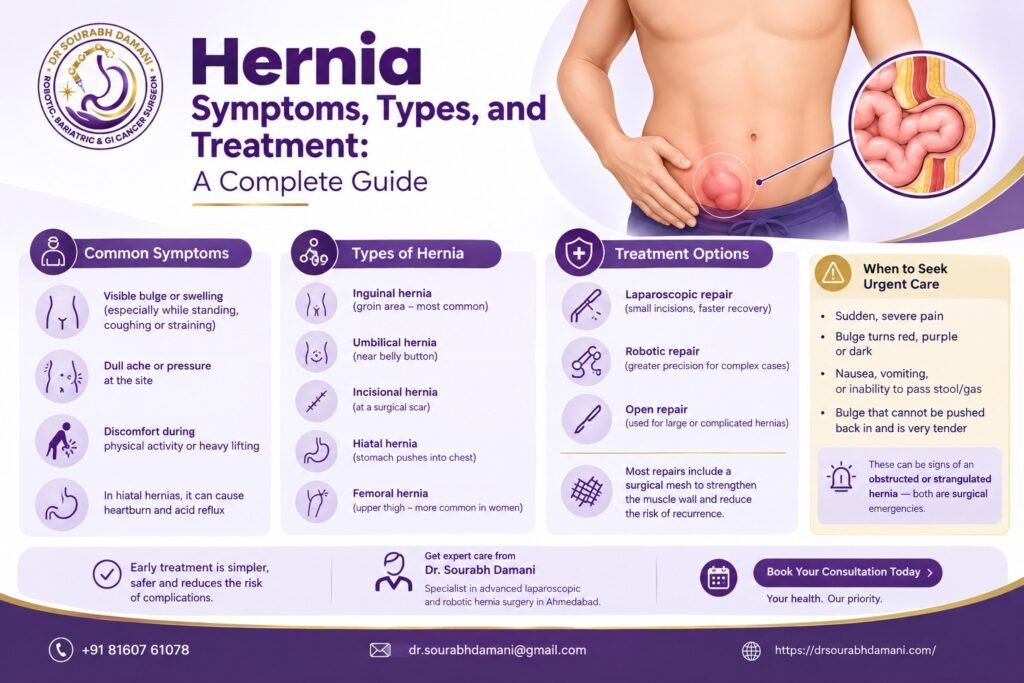
Hernia Symptoms, Types, and Treatment: A Complete Guide Introduction A hernia is one of the most common surgical problems, yet many people ignore it for months, thinking it’s just a lump or minor discomfort. Left untreated, a hernia can grow larger and lead to serious complications. Here’s a simple guide to help you understand what a hernia is, how to spot it early, and what your treatment options are What Exactly Is a Hernia? A hernia happens when an internal organ or tissue pushes through a weak spot in the surrounding muscle or connective tissue. Most commonly, this happens in the abdominal wall, causing a visible bulge under the skin. What Are the Different Types of Hernia? There are several types of hernia, and knowing which one you have matters for treatment: Inguinal hernia – occurs in the groin area; the most common type, especially in men  Umbilical hernia – appears near the belly button  Incisional hernia – develops at the site of a previous surgical scar Hiatal hernia – occurs when part of the stomach pushes into the chest through the diaphragm.  Femoral hernia – appears in the upper thigh, more common in women What Are the Common Symptoms of a Hernia? Symptoms can vary depending on the type and severity, but the most common signs include: A visible bulge or swelling, often more noticeable when standing, coughing, or straining  A dull ache or pressure at the site of the bulge  Discomfort that worsens with heavy lifting or physical activity  A burning or aching sensation around the lump In hiatal hernias, symptoms like heartburn and acid reflux When Does a Hernia Become a Medical Emergency? Most hernias grow slowly, but some can become dangerous quickly. Seek immediate medical attention if you notice: Sudden, severe pain at the hernia site  The bulge turning red, purple, or dark in color Nausea, vomiting, or inability to pass stool or gas  A bulge that cannot be pushed back in and is very tender These can be signs of an “obstructed hernia” where the intestine gets trapped and its passage is blocked — or a “strangulated hernia” where the blood supply to the trapped tissue is cut off. Both are surgical emergencies and need urgent medical attention. What Causes a Hernia to Develop? Hernias develop due to a combination of muscle weakness and strain. Common causes include: Heavy lifting with poor technique  Chronic coughing or sneezing Obesity  Pregnancy  Straining during bowel movements or urination  Previous abdominal surgery Can a Hernia Heal Without Surgery? Unfortunately, no. A hernia does not go away on its own, and it will not heal with medication, exercise, or a hernia belt. These measures may reduce discomfort temporarily, but the only way to permanently repair a hernia is through surgery. What Are the Treatment Options for Hernia Repair? Modern hernia treatment is far less invasive than it used to be. The main surgical options are: Laparoscopic hernia repair – performed through small incisions using a camera and specialised instruments, offering less pain, minimal scarring, and quicker recovery Robotic hernia repair – provides even greater precision, especially useful for complex or recurrent hernias Open hernia repair – still used in certain cases, especially very large or complicated hernias Most repairs also involve placing a surgical mesh to reinforce the weakened muscle wall and reduce the chance of recurrence. How Long Does Recovery Take After Hernia Surgery? Recovery depends on the type of hernia and surgical technique used, but with laparoscopic or robotic repair, most patients can: Go home within 1–2 days Return to light activities within a week Resume normal exercise within 4–6 weeks Should You Get Your Hernia Treated Now? If you’ve noticed a bulge or persistent discomfort, it’s best not to wait. Early treatment is simpler, safer, and reduces the risk of complications like strangulation. Dr. Sourabh Damani specialises in advanced laparoscopic and robotic hernia surgery in Ahmedabad. With over 12 years of surgical experience, he offers personalised evaluation and treatment plans to help you recover quickly and safely. Book a consultation today to discuss the right approach for your hernia

Robotic Surgery

Robotic Surgery vs Laparoscopic Surgery: Which One Do You Need?

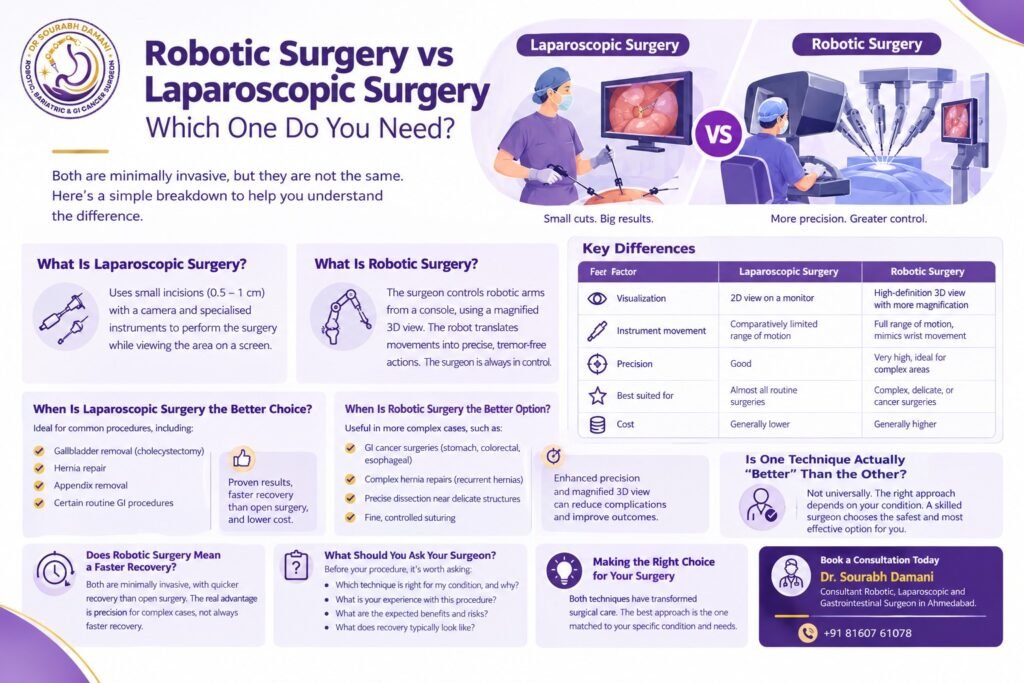
Robotic Surgery vs Laparoscopic Surgery: Which One Do You Need? Introduction If your doctor has recommended surgery for a gastrointestinal, hernia, or cancer-related condition, you may have come across two modern options: robotic surgery and laparoscopic surgery. Both are minimally invasive, but they are not the same. Here’s a simple breakdown to help you understand the difference. What Is Laparoscopic Surgery? Laparoscopic surgery, often called “keyhole surgery,” is performed using small incisions, typically 0.5 to 1 cm in size. The surgeon inserts a thin tube with a camera (laparoscope) and long, specialised instruments through these incisions to perform the operation while viewing the surgical area on a screen. What Is Robotic Surgery? Robotic surgery is an advanced form of minimally invasive surgery where the surgeon controls robotic arms from a console, using a magnified 3D view of the surgical area. The robotic system translates the surgeon’s hand movements into precise, tremor-free actions inside the body. Importantly, the robot does not operate on its own — the surgeon is in complete control at all times. What Are the Key Differences Between the Two? Factor Laparoscopic Surgery Robotic Surgery Visualization 2D view on a monitor High-definition 3D view with more magnification Instrument Movement Comparatively limited range of motion Full range of motion, mimics wrist movement Precision Good Very high, ideal for complex areas Best Suited For Almost all routine surgeries Complex, delicate, or cancer surgeries Cost Generally Lower Generally Higher When Is Laparoscopic Surgery the Better Choice? Laparoscopy remains an excellent option for many common procedures, including: Gallbladder removal (cholecystectomy)  Straightforward hernia repair  Appendix removal  Certain routine gastrointestinal procedures For these cases, laparoscopic surgery offers proven results, faster recovery than open surgery, and lower cost, without needing the added precision of robotics. When Is Robotic Surgery the Better Option? Robotic surgery tends to offer a real advantage in more complex cases, such as: Gastrointestinal cancer surgeries (stomach, colorectal, esophageal)  Complex hernia repairs, including recurrent hernias  Procedures requiring precise dissection near delicate structures, nerves, or blood vessels  Cases requiring fine, controlled suturing In these situations, the enhanced precision and better magnified 3D visualization can help reduce complications and improve surgical outcomes. Does Robotic Surgery Mean a Faster Recovery? Both robotic and laparoscopic surgery are minimally invasive, meaning smaller cuts, less pain, and quicker recovery compared to open surgery. However, robotic surgery does not always mean a dramatically faster recovery than laparoscopy for simple procedures — the real advantage lies in the precision it offers for complex cases, not necessarily recovery time. Is One Technique Actually “Better” Than the Other? Not universally. The right technique depends entirely on your specific condition. A skilled surgeon will choose the approach that offers the safest and most effective outcome for you, rather than defaulting to the most advanced technology available. In many cases, laparoscopic surgery is still the ideal choice, while in others, robotic precision makes a meaningful difference. What Should You Ask Your Surgeon Before Deciding? Before your procedure, it’s worth asking: Which technique is recommended for my specific condition, and why?  What is your experience with this particular procedure?  What are the expected benefits and risks of each approach in my case?  What does recovery typically look like? Making the Right Choice for Your Surgery Both robotic and laparoscopic surgery have transformed modern surgical care, offering safer, less painful alternatives to traditional open surgery. The best approach is the one matched to your specific condition and needs. Dr. Sourabh Damani is a consultant robotic, laparoscopic, and gastrointestinal surgeon in Ahmedabad, with extensive experience in both techniques across bariatric, hernia, and GI cancer surgery. Book a consultation today to discuss which approach is right for your treatment.

Gallbladder Surgery

Gallbladder Stone Symptoms You Should Never Ignore

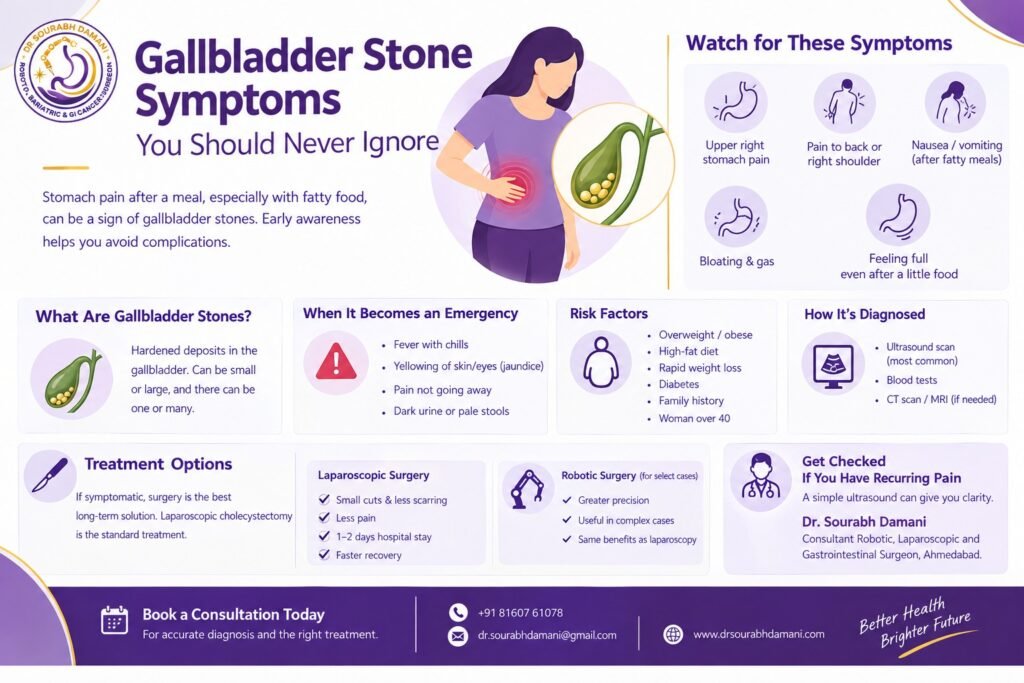
Gallbladder Stone Symptoms You Should Never Ignore Introduction Stomach pain after a meal is something most of us brush off as “just gas.” But if the pain keeps coming back, especially after fatty or oily food, it could be a sign of gallbladder stones. Gallstones are very common in India, and many people live with them for years without knowing. Understanding the early symptoms can help you avoid painful complications later. What Are Gallbladder Stones? The gallbladder is a small, pear-shaped organ under your liver. It stores bile, a fluid that helps digest fat. When the chemicals in bile become imbalanced, they can harden into small stones. These stones can be as tiny as a grain of sand or as large as a golf ball, and a person can have one stone or many at the same time. What Are the Early Warning Signs of Gallstones? Not everyone with gallstones feels pain right away. In fact, many stones stay “silent” for a long time. But when symptoms do appear, they usually include: Sudden, sharp pain in the upper right side of the stomach Pain that spreads to the back or right shoulder Nausea or vomiting, especially after fatty meals Bloating, gas, and indigestion A feeling of fullness even after eating very little This pain is often called a “gallbladder attack.” It can last from a few minutes to several hours and tends to come back again and again if left untreated. When Does Gallstone Pain Become an Emergency? Some symptoms mean the stone has caused a blockage or infection, and you should not wait to see a doctor. Watch out for: Fever with chills Yellowing of the skin or eyes (jaundice) Pain that does not go away after several hours Dark-colored urine or pale, clay-colored stools If you notice any of these, it is important to visit a gastro surgeon immediately, as the stone may have blocked the bile duct or caused inflammation of the gallbladder. Why Do Gallstones Form in the First Place? Several everyday factors can raise your risk: Being overweight or obese A diet high in fried and fatty food Rapid or crash weight loss Diabetes Family history of gallstones Being a woman over 40 (hormonal factors play a role) Understanding your risk factors can help you make small lifestyle changes to protect your gallbladder health. How Are Gallstones Diagnosed? Diagnosis is usually simple and painless. A doctor will typically recommend: An ultrasound scan, which is the most common and reliable test Blood tests to check for infection or blockage In some cases, a CT scan or MRI for a more detailed picture What Is the Treatment for Gallbladder Stones? If the stones are not causing symptoms, your doctor may simply monitor them. But if you are having repeated pain or complications, surgery is usually the best long-term solution. The standard treatment is laparoscopic cholecystectomy, a minimally invasive keyhole surgery to remove the gallbladder. Compared to open surgery, it offers: Smaller cuts and less scarring Less pain after surgery Shorter hospital stay (often just 1–2 days) Faster return to normal activities The good news is that the body functions normally without a gallbladder — bile simply flows directly from the liver to the intestine. Is Robotic Gallbladder Surgery an Option? Yes. For select cases, especially where the gallbladder is inflamed, has large stones, or where previous surgeries have caused scar tissue, robotic gallbladder surgery is becoming a preferred choice. Using a robotic system, the surgeon operates with a magnified 3D view and highly precise, wrist-like instrument movements, which can be especially useful in complex or high-risk cases. Benefits of robotic gallbladder removal (robotic cholecystectomy) include: Greater precision around delicate structures like the bile duct Reduced risk of injury in difficult or inflamed gallbladders Same benefits as laparoscopic surgery — small incisions, less pain, and quick recoveryFor straightforward gallstone cases, laparoscopic cholecystectomy remains a safe, effective, and widely used option. Your surgeon will help you decide whether a laparoscopic or robotic approach is best suited to your specific case. Should You Get Your Gallstones Checked? If you have been experiencing recurring pain after meals, don’t wait for it to get worse. Gallstones are highly treatable when caught early, and a simple ultrasound can give you clarity. Dr. Sourabh Damani is a consultant robotic, laparoscopic, and gastrointestinal surgeon based in Ahmedabad, with over 12 years of experience in advanced gallbladder and biliary tract surgery, including robotic gallbladder surgery for complex cases. If you are dealing with recurring abdominal pain, book a consultation today for an accurate diagnosis and the right treatment plan for you.

Bariatric

How Much Weight Can You Lose After Bariatric Surgery, and How Long Does It Take?

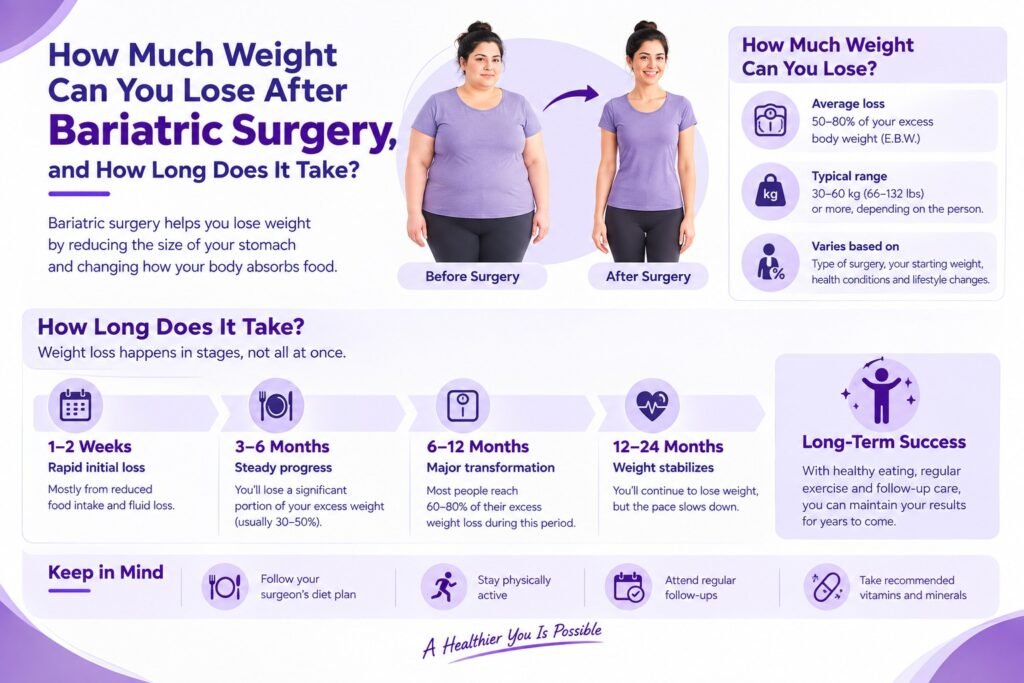
How Much Weight Can You Lose After Bariatric Surgery, and How Long Does It Take? Introduction “How much will I lose, and how fast?” is usually the first question people ask before weight loss surgery. The honest answer is that results vary, but research and clinical experience give us a reliable range. Here is what most patients can expect. How Much Weight Can You Realistically Lose? Excess Weight Loss vs. Total Body Weight Loss Results are usually reported in two ways. Excess weight loss is the percentage of your extra weight (the amount above your ideal weight) that you lose. Total body weight loss is the percentage of your starting weight. For example, someone weighing 120 kg who loses 35 kg has lost about 29% of their total body weight. Average Results by Procedure Sleeve gastrectomy: typically about 55-65% of excess weight, or roughly 25-30% of total body weight Gastric bypass: typically about 60-70% of excess weight, or roughly 30-35% of total body weight These are averages, not guarantees. Some people lose more and some less, depending on the factors below. Weight Loss Timeline: What to Expect The First 3 Months Weight loss is fastest early on, as your portions shrink and your body adjusts. Many patients lose a significant share of their total loss in this period. Under your care team’s guidance, your diet progresses from liquids to purees to soft foods to regular textures. Months 3 to 12 Loss continues steadily but slows. This is when new habits (protein-first meals, slow eating, regular activity) matter most. Most patients reach the majority of their weight loss within the first year. 12 to 24 Months and Beyond Weight usually bottoms out between 12 and 24 months after bariatric surgery, then stabilizes. A plateau at this stage is normal and does not mean the surgery has failed. What Affects Your Results? Type of procedure: bypass tends to produce slightly greater loss than a sleeve. Starting weight and age: higher starting weights often mean larger absolute loss. Eating habits: adequate protein, portion control, and avoiding sugary drinks and grazing all help. Physical activity: exercise preserves muscle and supports long-term maintenance. Medical conditions and medications: conditions such as hypothyroidism or some medications can affect the pace of weight loss. Follow-up care: patients who attend regular check-ups and take prescribed vitamins tend to do better. Can You Regain Weight After Bariatric Surgery? Some regain is common. Studies suggest many patients regain a portion of their lost weight, often around 10-20% of the amount lost, several years after surgery, though the majority keep most of it off. Regain is usually linked to a return to old eating patterns, low activity, or unaddressed emotional eating. The surgery is a powerful tool, but it works best alongside lasting lifestyle changes and ongoing follow-up. It’s Not Only About the Scale Weight loss is only part of the story. Many patients see improvement or remission of type 2 diabetes, high blood pressure, sleep apnea, fatty liver disease, and joint pain. Improved mobility, energy, and quality of life are also commonly reported. Results differ from person to person, so your doctor can tell you what is realistic for your health conditions. Who Is a Candidate? Bariatric surgery is generally considered for people with a BMI of 35 or more, or a lower BMI along with conditions like diabetes. Guidelines for Asians often use lower cut-offs, since health risks can start at a lower weight for us. A consultation with an experienced bariatric surgeon such as Dr. Sourabh Damani can help you understand whether you qualify and which procedure suits you. How to Choose the Right Bariatric Surgeon The surgeon you choose shapes both safety and long-term outcomes. Look for a qualified bariatric surgeon who: Has specialized training and a strong track record in weight loss procedures Explains all options, including non-surgical ones, and does not push a single procedure Works with a team of dietitians, physicians, and counselors Offers structured follow-up after surgery Key Takeaways Most people lose about 25-35% of their total body weight after bariatric surgery, with the fastest loss in the first six months and results stabilizing by 12-24 months. Your outcome depends on the procedure, your habits, and consistent follow-up care. A consultation with an experienced bariatric surgeon can help you understand which option suits your health and what results to expect.

Hernia

What Happens If You Ignore a Hernia for Too Long?

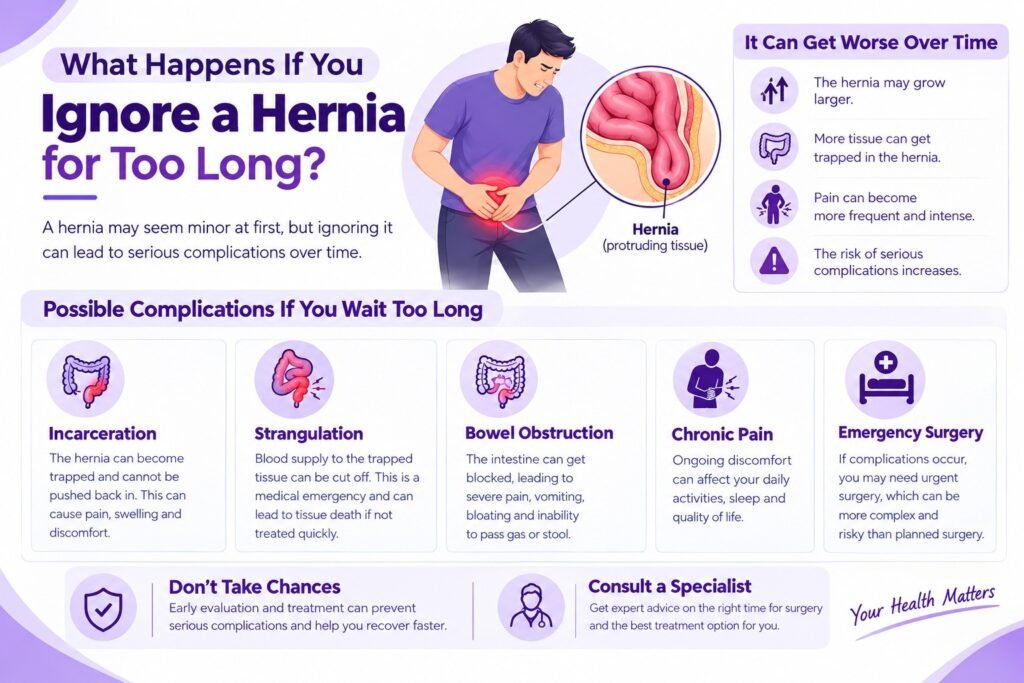
What Happens If You Ignore a Hernia for Too Long? Introduction A small bulge in the groin or abdomen that barely hurts is easy to put off. But a hernia does not go away on its own, and waiting too long can turn a manageable condition into a medical emergency. Here is what can happen when a hernia is left untreated, and how to know when it is time to act. What Is a Hernia and Why Won’t It Heal on Its Own? A hernia occurs when fatty tissue or part of the intestine pushes through a weak spot in the abdominal wall. Common types include inguinal (groin), umbilical (belly button), incisional (at a previous surgical scar), and hiatal hernias. Muscle and connective tissue do not knit back together once they have separated. Coughing, heavy lifting, and straining keep pressure on the weak area, so the opening tends to widen over time. Hernia surgery is the only treatment that repairs the defect. What Happens When a Hernia Is Left Untreated? The Hernia Grows Larger and Harder to Repair As the opening widens, more tissue can push through. A larger hernia often needs a more complex operation and a longer recovery than one repaired early. Ongoing Pain and Limited Daily Activity What starts as mild discomfort can become a constant ache or a dragging sensation, especially when standing, lifting, or exercising. Many people quietly reduce their activity without realizing the hernia is the cause. Incarcerated Hernia: When Tissue Gets Trapped Sometimes the protruding tissue becomes stuck and cannot be pushed back in. This is called an incarcerated hernia. It can cause severe pain, swelling, nausea, and constipation, and it can block the bowel. It needs prompt medical attention. Strangulated Hernia: A Medical Emergency If the trapped tissue loses its blood supply, it is called a strangulated hernia. Without blood flow, the tissue can die within hours, which may lead to infection, bowel perforation, and life-threatening sepsis. Emergency surgery is required, and outcomes are much riskier than with planned surgery. Warning Signs You Should Never Ignore Seek emergency care right away if you notice: Sudden, severe pain at the hernia site A bulge that turns red, purple, or dark A hernia that cannot be pushed back in Nausea, vomiting, or fever Inability to pass gas or stool These symptoms can signal obstruction or strangulation. Do not wait to see if they improve. When Should You See a Hernia Surgeon? The best time is when you first notice the bulge, not when it becomes painful. An experienced hernia surgeon, such as Dr. Sourabh Damani, can examine you, tell you what type of hernia you have, and explain whether you need treatment now or can safely monitor it for a while. Here’s my analytical take after years in this field: planned surgery is almost always calmer, safer, and easier on your wallet than emergency surgery. Choosing your timing beats having the hernia choose it for you. What to Expect From Hernia Surgery Most hernias can only be fixed with surgery, since exercise, belts, or home remedies don’t close the gap. Today, many patients have laparoscopic (keyhole) surgery, where a few tiny cuts are made, and a soft mesh supports the weak area. Here’s what recovery often looks like: Many patients go home the same day or the next day Light walking is encouraged early Desk work is often possible within a week or so, though this depends on the person Heavy lifting waits until your surgeon says it’s safe Simple Tips Avoid heavy lifting and straining Eat fibre-rich food and drink enough water to prevent constipation Maintain a healthy weight Quit smoking, since it weakens tissue healing Don’t rely on hernia belts without medical advice Your Next Step: Get It Checked A hernia will not heal by itself, and ignoring it can lead to growth, chronic pain, and dangerous complications like strangulation. The safest path is to get it examined early, know the emergency warning signs, and discuss your options with a qualified hernia surgeon. Timely hernia surgery is usually simpler, safer, and easier to recover from than emergency treatment.

Scroll to Top