Bariatric

Bariatric

Bariatric Surgery for Weight Loss: Is It Right for You?

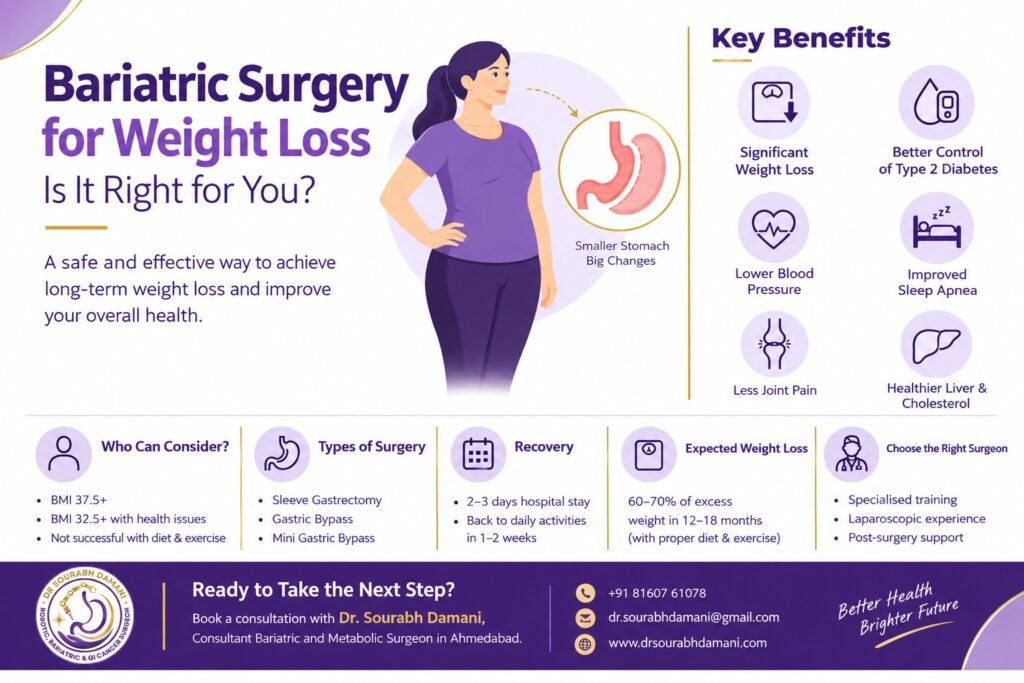
Bariatric Surgery for Weight Loss: Is It Right for You? Introduction If you’ve tried diets, exercise, and medications without lasting results, you’re not alone. Obesity is a complex medical condition, not just a lifestyle issue, and for many people, bariatric surgery becomes the most effective and safe option to achieve long-term weight loss. Here’s what you need to know before considering it. What Is Bariatric Surgery? Bariatric surgery, also called weight loss surgery or metabolic surgery, involves making changes to the digestive system to help a person lose weight. It works by either reducing the size of the stomach, limiting the amount of food you can eat, or changing how your body absorbs nutrients, sometimes both. Who Should Consider Bariatric Surgery? Bariatric surgery is generally recommended for people who: Have a Body Mass Index (BMI) of 37.5 or higher Have a BMI of 32.5 or higher, along with obesity-related conditions like type 2 diabetes, high blood pressure, or sleep apnea Have tried diet and lifestyle changes without sustained success A detailed evaluation by a metabolic surgeon helps determine if you’re a good candidate. What Are the Common Types of Bariatric Surgery? There are a few well-established surgical options, each with its own benefits: Sleeve Gastrectomy – removes a large portion of the stomach, leaving a smaller, sleeve-shaped stomach that limits food intake and reduces hunger hormones Gastric Bypass – creates a small stomach pouch and reroutes part of the small intestine, reducing both food intake and calorie absorption Mini Gastric Bypass – a simpler version of gastric bypass with a single anastomosis Your surgeon will recommend the best option based on your weight, health conditions, and lifestyle. What Benefits Does Bariatric Surgery Offer Beyond Weight Loss? Weight loss surgery does much more than help you shed kilos. Many patients experience significant improvement or complete resolution of: Type 2 diabetes High blood pressure Sleep apnea Joint pain due to excess weight High cholesterol Fatty liver disease Patients often also report better mobility, more energy, and improved self-confidence. Is Bariatric Surgery Safe? Yes, when performed by a trained and experienced metabolic surgeon, bariatric surgery is considered safe, with most procedures done laparoscopically through small incisions. Like any surgery, it carries some risks, which is why proper patient screening and a thorough pre-surgery evaluation are essential. It’s also important to understand that surgery is not a shortcut — it’s a tool. Long-term success depends on committing to dietary changes, regular follow-up, and an active lifestyle after the procedure. What Does Recovery Look Like After Bariatric Surgery? Since most bariatric procedures are done laparoscopically, recovery is generally quicker than open surgery: Hospital stay of around 2–3 days Return to light daily activities within a week or two Gradual diet progression from liquids to soft food to regular food over several weeks Regular follow-up visits to monitor nutrition and weight loss progress How Much Weight Can You Expect to Lose? Weight loss results vary from person to person, but most patients lose 60–70% of their excess weight within the first 12–18 months after surgery, especially when combined with proper diet and exercise guidance. What Should You Look for in a Bariatric Surgeon? Choosing the right surgeon matters as much as choosing the right procedure. Look for: Specialised training and certification in bariatric and metabolic surgery  Experience with laparoscopic and minimally invasive techniques  A structured post-surgery support programme, including a dietician and follow-up care Ready to Take the Next Step? Bariatric surgery can be life-changing, but the decision should be made with clear, honest guidance from an experienced surgeon. Dr. Sourabh Damani is a consultant bariatric and metabolic surgeon in Ahmedabad, offering personalised evaluation and advanced laparoscopic weight loss surgery. Book a consultation today to understand which option is right for your health goals.
Bariatric

How Much Weight Can You Lose After Bariatric Surgery, and How Long Does It Take?

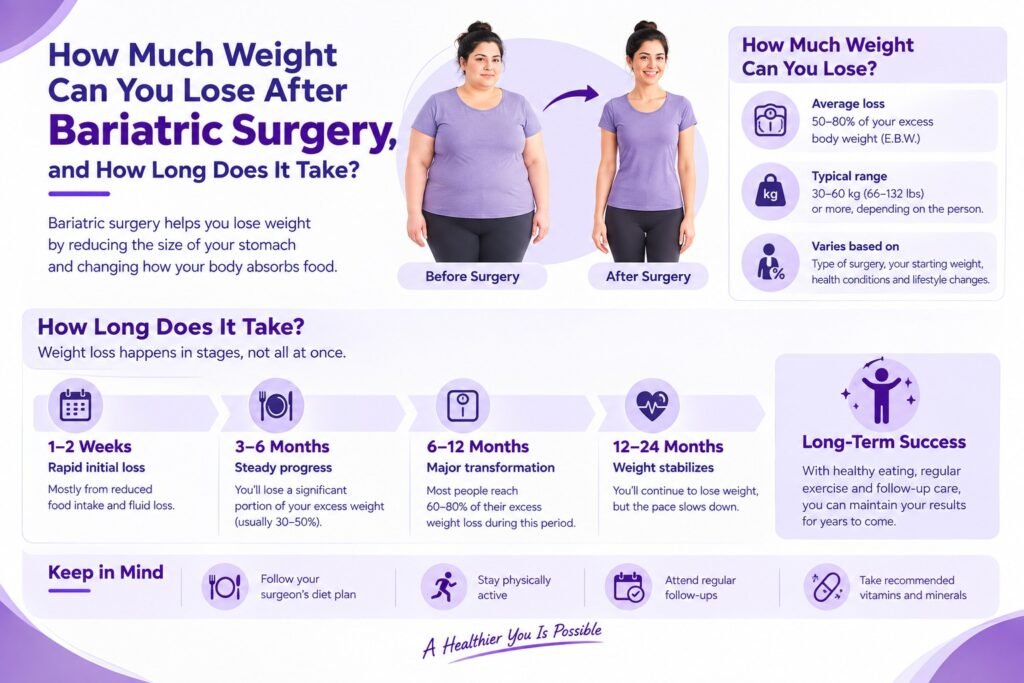
How Much Weight Can You Lose After Bariatric Surgery, and How Long Does It Take? Introduction “How much will I lose, and how fast?” is usually the first question people ask before weight loss surgery. The honest answer is that results vary, but research and clinical experience give us a reliable range. Here is what most patients can expect. How Much Weight Can You Realistically Lose? Excess Weight Loss vs. Total Body Weight Loss Results are usually reported in two ways. Excess weight loss is the percentage of your extra weight (the amount above your ideal weight) that you lose. Total body weight loss is the percentage of your starting weight. For example, someone weighing 120 kg who loses 35 kg has lost about 29% of their total body weight. Average Results by Procedure Sleeve gastrectomy: typically about 55-65% of excess weight, or roughly 25-30% of total body weight Gastric bypass: typically about 60-70% of excess weight, or roughly 30-35% of total body weight These are averages, not guarantees. Some people lose more and some less, depending on the factors below. Weight Loss Timeline: What to Expect The First 3 Months Weight loss is fastest early on, as your portions shrink and your body adjusts. Many patients lose a significant share of their total loss in this period. Under your care team’s guidance, your diet progresses from liquids to purees to soft foods to regular textures. Months 3 to 12 Loss continues steadily but slows. This is when new habits (protein-first meals, slow eating, regular activity) matter most. Most patients reach the majority of their weight loss within the first year. 12 to 24 Months and Beyond Weight usually bottoms out between 12 and 24 months after bariatric surgery, then stabilizes. A plateau at this stage is normal and does not mean the surgery has failed. What Affects Your Results? Type of procedure: bypass tends to produce slightly greater loss than a sleeve. Starting weight and age: higher starting weights often mean larger absolute loss. Eating habits: adequate protein, portion control, and avoiding sugary drinks and grazing all help. Physical activity: exercise preserves muscle and supports long-term maintenance. Medical conditions and medications: conditions such as hypothyroidism or some medications can affect the pace of weight loss. Follow-up care: patients who attend regular check-ups and take prescribed vitamins tend to do better. Can You Regain Weight After Bariatric Surgery? Some regain is common. Studies suggest many patients regain a portion of their lost weight, often around 10-20% of the amount lost, several years after surgery, though the majority keep most of it off. Regain is usually linked to a return to old eating patterns, low activity, or unaddressed emotional eating. The surgery is a powerful tool, but it works best alongside lasting lifestyle changes and ongoing follow-up. It’s Not Only About the Scale Weight loss is only part of the story. Many patients see improvement or remission of type 2 diabetes, high blood pressure, sleep apnea, fatty liver disease, and joint pain. Improved mobility, energy, and quality of life are also commonly reported. Results differ from person to person, so your doctor can tell you what is realistic for your health conditions. Who Is a Candidate? Bariatric surgery is generally considered for people with a BMI of 35 or more, or a lower BMI along with conditions like diabetes. Guidelines for Asians often use lower cut-offs, since health risks can start at a lower weight for us. A consultation with an experienced bariatric surgeon such as Dr. Sourabh Damani can help you understand whether you qualify and which procedure suits you. How to Choose the Right Bariatric Surgeon The surgeon you choose shapes both safety and long-term outcomes. Look for a qualified bariatric surgeon who: Has specialized training and a strong track record in weight loss procedures Explains all options, including non-surgical ones, and does not push a single procedure Works with a team of dietitians, physicians, and counselors Offers structured follow-up after surgery Key Takeaways Most people lose about 25-35% of their total body weight after bariatric surgery, with the fastest loss in the first six months and results stabilizing by 12-24 months. Your outcome depends on the procedure, your habits, and consistent follow-up care. A consultation with an experienced bariatric surgeon can help you understand which option suits your health and what results to expect.

Scroll to Top