Laparoscopic Surgery in Ahmedabad
Laparoscopic and endoscopic treatment for acid reflux, hiatal hernia, achalasia, esophageal strictures and esophageal cancer, planned around the specific test results and symptom pattern of each case.
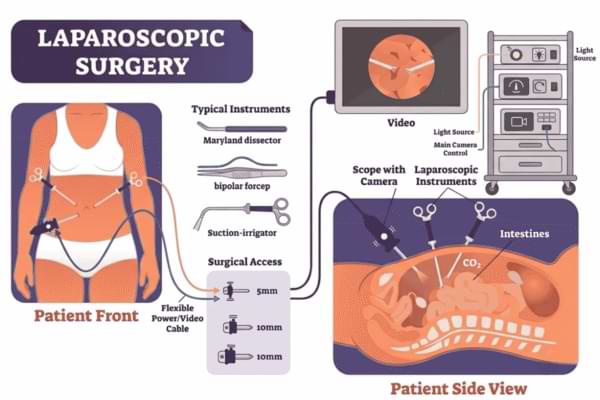
Laparoscopic surgery—commonly referred to as keyhole surgery—is a modern technique where operations in the abdomen or pelvis are performed through small incisions (usually 0.5 to 1 cm) instead of large open cuts. By avoiding expansive muscle-cutting incisions, this approach preserves the structural integrity of the abdominal wall, causes less pain, and significantly speeds up recovery.
Laparoscopic Surgery Covers a Broad Diagnostic and Therapeutic Spectrum
Diagnostic Exploration & Staging
When advanced imaging like CT scans or MRIs leaves a diagnosis unclear, a diagnostic laparoscopy allows direct visual inspection of the abdominal cavity. This is critical for evaluating unexplained chronic pelvic pain, staging complex gastrointestinal malignancies, or taking precise tissue biopsies of deep lymph nodes, liver tissue, or peritoneal lesions.
Routine Solid Organ and Tissue Removals
Standard visceral pathologies are routinely managed using minimally invasive access. This includes removing the gallbladder for symptomatic gallstones (cholecystectomy), excising an inflamed appendix (appendectomy), treating localized splenic disorders (splenectomy), or removing symptomatic benign cysts from the liver and surrounding structures.
Complex Abdominal Wall & Anti-Reflux Reconstruction
Advanced laparoscopy is highly effective for rebuilding internal structural alignment. This ranges from repairing groin and complex incisional hernias using pre-peritoneal mesh techniques to performing anti-reflux procedures like a Nissen fundoplication for severe GERD, or a Heller myotomy to treat swallowing disorders like achalasia.
Major Gastrointestinal & Colorectal Resections
Large-scale therapeutic operations for both benign diseases (like severe diverticulitis or Crohn’s disease) and malignant tumors are highly managed through laparoscopy. This encompasses partial or total removals of the colon (colectomy), stomach resections, and complex small bowel reconstructions, offering oncologically identical clearance to traditional open surgery.
Laparoscopic Procedures We Perform
Minimally invasive interventions are precisely tailored based on the specific organ system, disease stage, and the patient’s overall physical condition.
Upper Gastrointestinal & Hepatobiliary Laparoscopy
Laparoscopic Cholecystectomy: Precision removal of the gallbladder for gallstones or acute cholecystitis, utilizing sub-centimeter port access to ensure a swift return to daily activity.
Laparoscopic Appendectomy: Immediate minimal-access extraction of an acutely inflamed appendix, greatly lowering the risk of wound infections compared to open incisions.
Hiatal Hernia & Anti-Reflux Repairs: Reconstructing the diaphragmatic opening and wrapping the upper stomach (Nissen or Toupet fundoplication) to treat severe chronic acid reflux.
Colorectal & Intestinal Laparoscopic Resections
Laparoscopic Colectomy & Anterior Resection: Removing diseased or cancerous segments of the large intestine for colon cancer, rectal tumors, or complicated diverticular disease, ensuring complete lymph node clearance through keyhole access.
Small Bowel Adhesiolysis & Resection: Carefully separating complex internal scar tissue (adhesions) or removing blocked intestinal segments under direct camera visualization.
Advanced Solid Organ & Reconstructive Interventions
Laparoscopic Splenectomy & Liver Resection: Utilizing advanced vessel-sealing technology to safely remove the spleen or clear focal liver lesions with minimal blood loss.
Laparoscopic Hernia Repairs (TEP, TAPP, eTEP): Deploying durable structural meshes directly behind the muscle layers to permanently resolve groin, umbilical, and incisional defects.
The Laparoscopic Surgical Process: Step-by-Step
Every minimal-access procedure follows a highly coordinated, structured sequence to optimize visualization and guarantee safety.
1. Pre-Operative Preparation
1-2 Weeks Before
Comprehensive physiological evaluations, anesthetic safety screens, and specific dietary charting are completed to prepare the digestive system for surgery.
2. Anesthesia Administration
Administration:Surgical Day
The procedure is performed under deep general anesthesia, ensuring total muscle relaxation and a completely pain-free, stable operative state.
3.Insufflation and Trocar Access
Intra-Operative
The surgeon creates a tiny primary incision near the navel to introduce medical-grade carbon dioxide gas. This gently expands the abdomen, creating a safe, highly visible working space. Specialized ports (trocars) are then placed.
4.High-Definition Visualization
Intra-Operative
A high-definition laparoscope (a rod-like telescope attached to a surgical camera) is inserted through a port, projecting a highly magnified, sharp 4K image of the internal organs onto dual operating monitors.
5.Targeted Surgical Intervention:
Intra-Operative
Utilizing specialized, slender micro-instruments through the secondary ports, the surgeon performs the necessary cutting, dissection, vessel-sealing, or suturing with millimeter-level precision.
6.Port Site Closure
Intra-Operative
The CO2 gas is completely evacuated from the abdominal cavity to prevent post-operative soreness. The tiny skin incisions are then neatly adapted using dissolving aesthetic sutures or medical surgical glue.
Recovery After Laparoscopic Surgery
The fundamental advantage of minimal-access surgery is a significantly compressed, comfortable recovery timeline.
Patients are encouraged to stand up and walk within a few hours of waking from anesthesia, which stimulates normal bowel movements and prevents blood clots. Clear fluids are started early and gradually upgraded to a soft diet. Discharge from the hospital typically occurs within 24 to 48 hours for standard cases.
Mild, temporary discomfort near the port sites or transient soreness in the shoulder (a common side effect from residual gas) resolves quickly with simple oral pain relievers. Waterproof dressings allow for easy showering, and a standard one-week clinical follow-up is scheduled.
Energy levels return rapidly, allowing a safe return to standard desk work and driving. While active walking is highly encouraged, patients must refrain from heavy core exercises or lifting objects heavier than 5 kg during this muscle-maturation window.
A final clinical review confirms uniform skin healing and optimal internal recovery. Patients are cleared to fully return to heavy workouts, strenuous physical labor, and regular unrestricted athletic routines.
Meet Dr Sourabh Damani - Laproscopic Surgeon
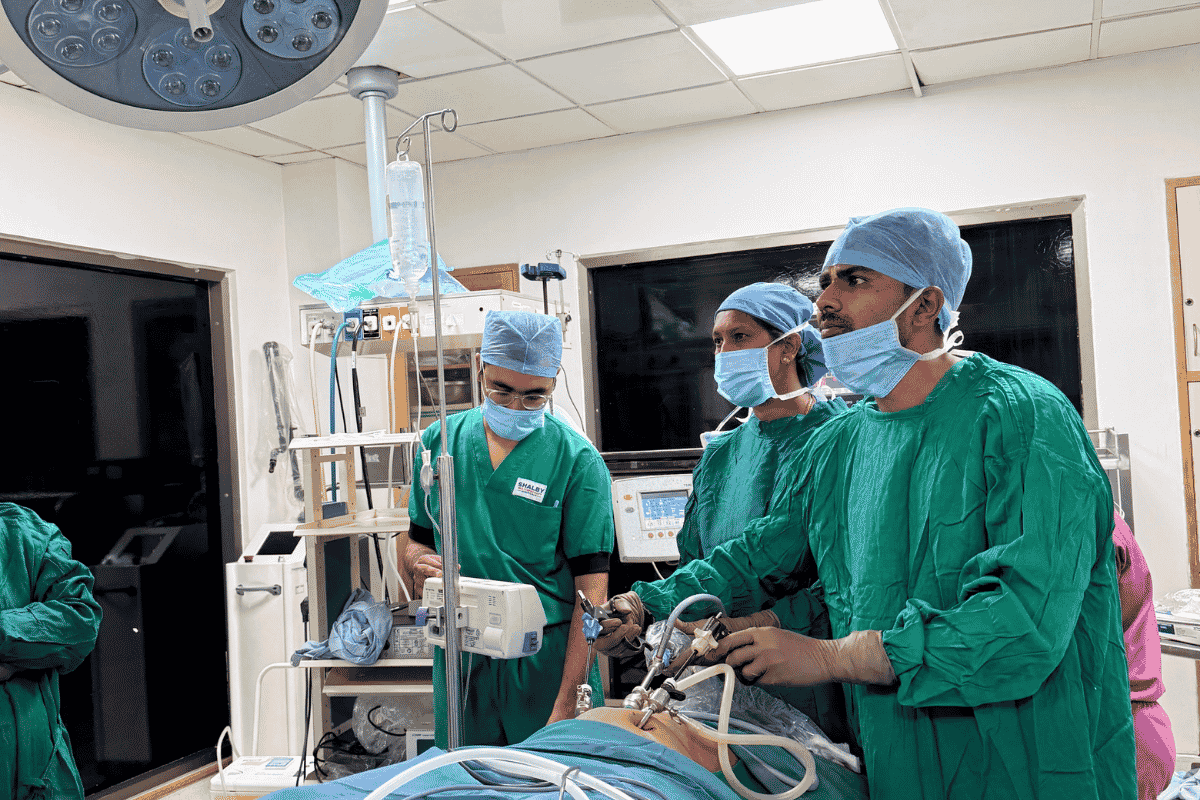
Practicing as a Gastrointestinal and Advanced Laparoscopic Surgeon in Ahmedabad, dedicated to minimizing patient recovery times through sophisticated minimal-access and extraperitoneal surgical techniques

Performs advanced laparoscopic resections for gallstones, complex abdominal wall hernias, and appendicitis on a daily basis.
Specializes in minimally invasive gastrointestinal oncology, achieving radical cancer clearances for colon, rectal, and stomach malignancies.
Utilizes high-precision energy devices and advanced suturing techniques to handle delicate solid-organ surgeries like splenectomies and liver biopsies.
Focuses closely on meticulous port-site placement and complete gas evacuation to reduce post-operative pain and optimize cosmetic healing.
Laparoscopic Surgery in Ahmedabad: Frequently Asked Questions
What is laparoscopic surgery?
Laparoscopic surgery is a minimally invasive surgical technique where operations inside the abdomen or pelvis are performed through small, sub-centimeter incisions using a camera and specialized slender instruments, replacing the need for a large traditional open cut.
What are the main benefits of laparoscopic surgery compared to traditional open surgery?
Because laparoscopic surgery uses small incisions rather than a long abdominal cut, patients experience significantly less tissue trauma and blood loss. This translates directly into much lower post-operative pain, a drastically reduced risk of wound infections or incisional hernias, shorter hospital stays, a faster return to work, and minimal cosmetic scarring.
What are the benefits of laparoscopic surgery?
Compared to traditional open surgery, laparoscopy offers significantly less post-operative pain, reduced blood loss, shorter hospital stays, a much lower risk of wound infections or incisional hernias, minimal cosmetic scarring, and a drastically faster return to daily activities and work.
Can all surgeries be done laparoscopically?
While a vast majority of abdominal procedures can be performed laparoscopically, it may not be suitable for every patient. Factors such as massive internal tumors, severe acute internal bleeding, extensive dense scar tissue from multiple prior open surgeries, or advanced heart and lung conditions may require a traditional open approach to ensure complete surgical safety.
Book an Appointment for Laparoscopic Consultation in Ahmedabad
Please bring all your recent ultrasound films, abdominal CT or MRI reports, complete blood work charts, and summaries of any previous surgeries. The initial clinical consultation focuses on checking your diagnostic reports to confirm if a minimal-access laparoscopic path is the safest and most effective option for your condition.