
Robotic Surgery in Ahmedabad
Advanced robot-assisted minimally invasive procedures for complex gastrointestinal malignancies, abdominal wall reconstructions, hiatal repairs, and bariatric revisions, providing multi-jointed articulation and high-definition three-dimensional visualization.
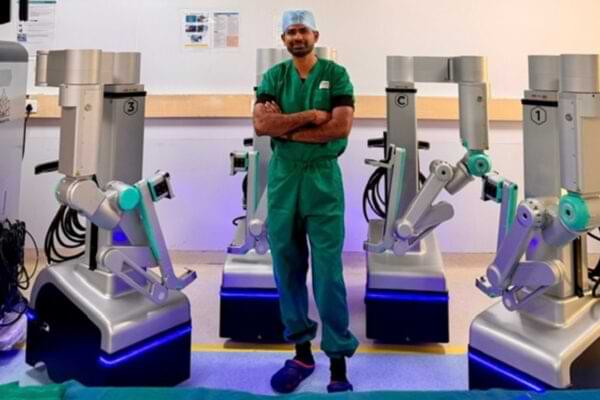
Robotic surgery is a highly refined evolution of standard laparoscopy. It does not replace the surgeon; rather, it functions as an advanced instrument interface controlled entirely by the operating surgeon. By translating the surgeon’s natural hand movements into micro-movements inside the abdomen, the robotic platform allows for precision, flexibility, and spatial control that cannot be achieved through traditional straight-stick laparoscopic instruments.
Robotic-Assisted Surgery Changes How We Approach Complex Anatomy
3-D High-Definition Magnification
Unlike standard surgery or traditional laparoscopy, which provides a two-dimensional flat view, the robotic system gives the surgeon a high-definition, magnified, true 3-D view of the surgical field. This depth perception allows for clear visualization of tiny blood vessels, microscopic nerve bundles, and subtle tissue borders, which is critical when dissecting complex tumors away from healthy structures.
EndoWrist Articulation (Multi-Jointed Maneuverability)
Standard laparoscopic instruments do not bend at the tips; they move in a straight line. The robotic system utilizes specialized instruments with multi-jointed wrists that mimic—and exceed—the rotational range of a human wrist. This enables the surgeon to operate with 7 degrees of freedom, allowing them to stitch, tie knots, and dissect around tight corners deep inside the pelvis or upper abdomen.
Tremor Filtration & Scaling
The console technology filters out tiny, natural hand tremors that every human possesses. It can also scale movements—meaning a 2-centimeter move of the surgeon’s hand outside translates to a precise 2-millimeter adjustment inside the body. This level of stability significantly reduces the risk of accidental tissue abrasion or blood vessel disruption.
Enhanced Ergonomics for Long Procedures
The operating surgeon sits comfortably at a master console next to the operating table, reducing physical fatigue during multi-hour cancer resections or complex abdominal wall reconstructions. This ergonomic setup ensures maximum focus and precision from the first minute of the procedure to the last.
Robotic Procedures We Perform
We utilize robotic assistance primarily for intricate gastrointestinal surgeries where deep narrow spaces, meticulous suturing, or delicate tissue separation are required.
Robotic Gastrointestinal
Cancer Surgeries
Colorectal Resections: Removing rectal and colon cancers deep within the narrow bony pelvis, preserving delicate autonomic nerves responsible for bladder and bowel function.
Esophagectomy & Gastrectomy: Precise clearance of lymph nodes and careful reconstruction of the digestive tract for esophageal and stomach malignancies.
Pancreatic & Biliary Procedures: Highly controlled dissection around major abdominal blood vessels for complex hepatopancreatobiliary (HPB) conditions.
Robotic Abdominal Wall
Reconstruction & Complex Hernia Repairs
eTEP & TAR Approaches: Reconstructing large, complex ventral or incisional hernias by separating scarred muscle layers and placing wide structural mesh completely outside the abdominal cavity (retro-rectus space).
Recurrent Hernias: Navigating through dense, hard scar tissue from previous failed open hernia operations with minimal disruption to the surrounding belly wall.
Robotic Anti-Reflux &
Hiatal Hernia Repairs
This approach corrects severe, medication-resistant GERD and structural defects of the diaphragmatic hiatus. The surgeon safely dissects the hernia sac, pulls the stomach back down into the abdomen, and closes the widened diaphragm opening with heavy sutures. The upper curve of the stomach is then wrapped around the lower esophagus with precise, tension-free robotic stitching to restore a functional anti-reflux barrier.
Robotic Bariatric &
Metabolic Revisions
Revision Weight Loss Procedures: Revision surgery corrects anatomical complications or poor weight maintenance from a previous weight loss procedure. The high-definition 3D robotic camera allows the surgeon to identify fine tissue borders and safely separate dense internal scar tissue. Computer-stabilized instruments filter out micro-tremors, enabling precise manual suturing to remodel old staple lines and securely connect tissues, minimizing the risk of chronic leaks.
Benefits of the Robotic Approach
By combining the tiny entry points of keyhole surgery with the unmatched control of the robotic arms, patients experience a distinctly smoother clinical course:
Drastically Lower Blood Loss:
Precision vessel sealing and micro-dissection minimize capillary bleeding, nearly eliminating the need for intra-operative blood transfusions.
Reduced Post-Operative Pain:
Because the robotic arms pivot around a fixed point at the abdominal wall (remote center technology), they do not stretch or pull on the muscle incisions during the surgery, resulting in less tissue trauma and pain.
Decreased Surgical Site Infections:
Operating through precise, small incisions significantly reduces tissue exposure to ambient air compared to wide open incisions, keeping infection rates remarkably low.
Faster Return of Bowel Function:
Minimal handling and shifting of the intestines mean the digestive tract wakes up quicker, letting patients resume solid food early and return home within fewer days.
Meet Dr. Sourabh Damani—Robotic Surgeon
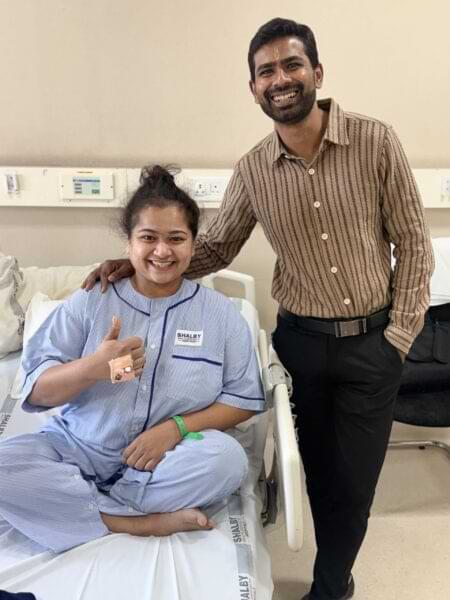
Practising as a Consultant Gastrointestinal and Minimal Access Surgeon in Ahmedabad, with specialized training and a focus on advanced laparoscopic and robotic gastrointestinal interventions.

Extensively trained in advanced minimal access techniques at the premier GEM Hospital and Research Institute (Coimbatore) under pioneering gastrointestinal mentors.
Performs robotic-assisted surgeries for colorectal cancers, complex recurrent ventral hernias, and advanced abdominal wall reconstructions.
Utilizes the robotic console’s multi-jointed instrumentation to achieve precise lymph node clearance in GI oncology and tension-free suturing in anti-reflux procedures.
Combines comprehensive clinical experience across major national institutions to deliver tailored, evidence-based robotic treatment plans.
Robotic Surgery: Frequently Asked Questions
Does the robot perform the surgery automatically?
No, the robot cannot move on its own and does not make independent decisions. Every single movement of the robotic arms is driven directly, in real-time, by the fingers and hands of the operating surgeon sitting at the console. If the surgeon moves their hand, the instrument moves; if the surgeon pauses, the system freezes safely in place. It is completely under human surgical control at all times.
Is robotic surgery open surgery or laparoscopic surgery?
Robotic surgery is a highly advanced form of laparoscopic (minimally invasive) surgery. It uses similar small, keyhole incisions (usually 8mm wide) instead of a large open cut. The core difference lies in the tools: while traditional laparoscopy uses rigid, straight hand-held instruments, robotic surgery uses multi-jointed, computer-stabilized instruments controlled from a console.
How long is the recovery period after a robotic GI surgery?
While exact recovery timelines depend on the specific organ being treated, most patients undergoing robotic gastrointestinal procedures are up and walking by the next day. Many are discharged from the hospital within 2 to 4 days—compared to 7 to 10 days for traditional open surgery. Most individuals can transition back to light office work and normal routines within 2 weeks.
What happens if there is a technical glitch during a robotic procedure?
Robotic platforms feature multiple layers of redundant safety software that constantly run diagnostic checks. If any variance is detected, the system safely locks the instruments in place instantly. If a technical issue cannot be resolved immediately, the surgical team is fully prepared to smoothly convert the procedure to a standard laparoscopic or open approach to complete the operation safely without a break in care.
Schedule a Consultation for Robotic Evaluation
Please bring all current abdominal CT or MRI scan films/discs, previous operative notes (if you have had prior abdominal operations), and your complete medical history reports. The clinical consultation focuses on determining whether your specific anatomy and condition are best suited for a robotic approach or if a standard laparoscopic method remains the optimal path for you.