
Laparoscopic, open, and emergency surgical treatment for intestinal obstructions, bowel perforations, colorectal cancer, inflammatory bowel disease (IBD), and complex intestinal fistulas, structured around specific staging and imaging reports.
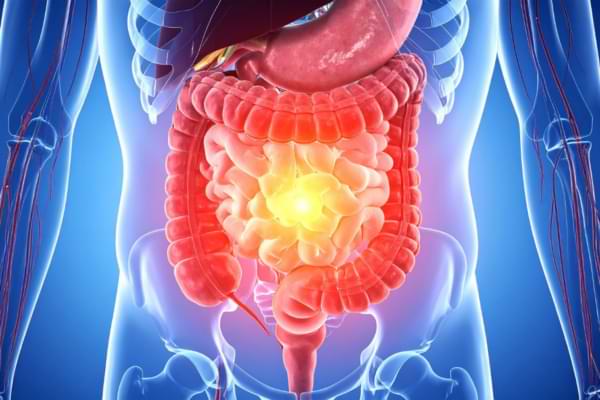
The small and large intestines form the longest section of the digestive tract. They can be affected by structural blockages, tissue inflammation, poor blood supply, or abnormal growths. Because these issues can alter nutrient absorption or waste elimination, surgery is tailored to the specific segment involved.
Intestinal Surgery Covers a Range of Conditions
Intestinal Obstruction & Adhesions
A mechanical blockage where food, fluid, and gas cannot pass through the bowel. This is frequently caused by internal scar tissue (adhesions) from prior surgeries, hernias, or strictures, and requires prompt surgical clearing to prevent tissue damage.
Colorectal Cancer & Tumours
Malignant growths originating in the large intestine (colon) or rectum, or rarer tumours in the small bowel. Treatment involves clearing the affected segment and its surrounding lymph nodes, often coordinated alongside medical oncology.
Intestinal Perforations & Bleeding
An acute tear or puncture in the intestinal wall caused by severe ulcers, infections (such as intestinal tuberculosis), or trauma. This is a surgical emergency that requires immediate closure to prevent widespread abdominal infection.
Inflammatory Bowel Disease (Crohn’s & Ulcerative Colitis)
Chronic inflammatory conditions that cause severe ulceration, strictures, or deep tracts (fistulas) in the intestinal wall. Surgery is considered when medical management fails to control complications like bleeding, narrowing, or perforations.
Enterocutaneous Fistula
An abnormal channel that forms between the intestine and the skin, causing digestive fluids to leak externally. These are highly complex cases requiring specialized nutritional support followed by surgical reconstruction to close the tract.
Intestinal Procedures We Perform
The approach—whether laparoscopic or open—depends on whether the operation is an elective procedure or an emergency, as well as the exact location and extent of the disease.
Laparoscopic / Open Colectomy
for Large Bowel Conditions
A segment of the large intestine (colon) affected by cancer, severe diverticulitis, or inflammation is removed. In a partial colectomy, the diseased portion is excised, and the healthy ends are sutured or stapled back together.
A total colectomy involves removing the entire colon. Depending on the disease stage and the emergency nature of the case, it is performed either through minimally invasive laparoscopy or an open incision.
Duration: 1.5 - 2.5 hours
Recovery: 1 - 2 weeks
Bowel Resection & Anastomosis
for Small Intestine Lesions
The surgeon removes a damaged, obstructed, or diseased section of the small bowel (due to tumours, strictures, or localized tuberculosis). The two remaining healthy segments are immediately reconnected (anastomosis) to restore a continuous path for digestion.
This is often performed laparoscopically for localized small bowel tumours or benign strictures, ensuring minimal tissue disruption.
Duration: 1.5 - 2 hours
Recovery: 1 - 2 weeks
Emergency
Perforation Repair & Adhesiolysis
For acute intestinal tears, the perforation is closed or the damaged segment is rapidly removed to stop intra-abdominal contamination. In cases of acute obstruction caused by internal scar tissue, adhesiolysis is performed—where band-like adhesions are carefully divided to completely release the trapped loops of the bowel and restore normal blood flow.
Duration: 1.5 - 3 hours
Recovery: 4 - 7 days (Hospital Stay)
Stoma Creation (Ileostomy / Colostomy)
for Bowel Rest
An opening is created on the abdominal wall, and a loop of the small or large intestine is brought out to divert stool into an external collection pouch. This is often a temporary measure used in emergency surgery or complex reconstructions to allow a newly repaired bowel connection down the line to heal safely without the stress of passing waste. It is typically reversed in a subsequent minor operation.
Duration: 45 - 90 minutes
Recovery: 3 - 5 days (Hospital Stay)
Before Intestinal Surgery: What to Expect
A clear diagnostic baseline is necessary to plan elective intestinal operations. Emergency cases bypass the extended staging steps to proceed directly to treatment.
1. Clinical Evaluation
A full assessment of regular bowel habits, weight loss patterns, abdominal pain history, and any previous abdominal surgeries that could indicate internal scar tissue.
2. Endoscopic Evaluation
A colonoscopy or sigmoidoscopy is performed to visually inspect the inner lining of the large intestine, allowing the surgeon to evaluate inflammation, document strictures, or take tissue biopsies.
3. Diagnostic Imaging
High-resolution CT scans of the abdomen and pelvis, or specialized CT enterography, are used to map the exact location of obstructions, evaluate the thickness of the bowel wall, and stage tumours.
4. Pre-operative Optimization
For elective cases, patients undergo specific bowel preparation protocols, nutritional evaluation, and mapping if a temporary stoma is anticipated as part of the surgical plan.
Recovery After Intestinal Surgery
The recovery pathway depends heavily on whether the procedure was performed laparoscopically or through an open incision, and whether a bowel reconnection or a stoma was created.
Days 1–3
The focus is on managing discomfort and encouraging early movement, such as short walks around the room, to stimulate the bowels. Patients receive intravenous fluids, and small sips of liquids are introduced as intestinal motility returns.
Week 1
The diet progresses gradually from clear liquids to a low-residue, soft diet. Patients with a temporary stoma receive detailed training on how to manage and care for the appliance prior to being discharged from the hospital.
Weeks 2–4
The surgical incisions are monitored as they heal. Diet remains focused on easily digestible, low-fiber foods to prevent strain on the healing intestinal connections. Light daily activities are encouraged, but heavy lifting and strenuous core exercises remain restricted.
Weeks 6+
A gradual transition back to a normal, balanced diet is initiated based on individual tolerance. A follow-up consultation evaluates overall bowel function, nutritional status, and plans any necessary long-term medical management or stoma reversal timelines.
About Dr Sourabh Damani
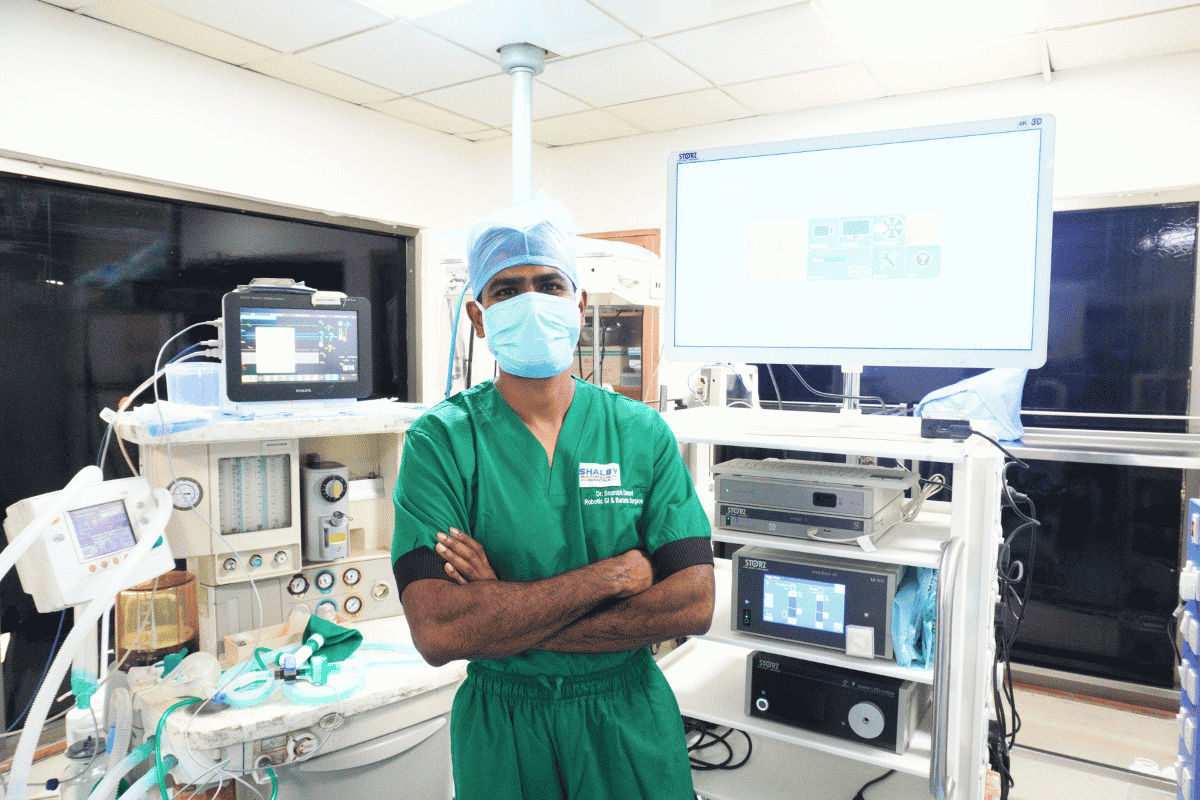
Practising as a Gastrointestinal and Laparoscopic Surgeon in Ahmedabad, with a focused interest in colorectal malignancies, inflammatory bowel disease complications, and emergency intestinal interventions.
Performs laparoscopic and open bowel resections, colectomies, and complex closure of enterocutaneous fistulas.
Manages acute abdominal emergencies, including intestinal perforations, gangrenous bowel segments, and acute mechanical obstructions.
Collaborates with gastroenterologists to coordinate timing for surgical interventions in severe Crohn’s disease and Ulcerative Colitis.
Guides patients through temporary stoma management, dietary modifications, and subsequent stoma reversal procedures.
Small & Large Intestine Surgery: Frequently Asked Questions
What is the difference between a temporary stoma and a permanent stoma?
A temporary stoma is created to protect a newly joined section of bowel from infection or stress, allowing it to heal completely over a few months before being surgically reversed. A permanent stoma is only required when the lower rectum or anal sphincter must be entirely removed due to advanced disease, leaving no remaining tissue to safely reconnect.
Can intestinal tuberculosis be completely cured with surgery?
Surgery for intestinal tuberculosis is typically reserved for correcting structural complications, such as relieving a complete bowel obstruction, stretching or removing dense strictures, or closing an acute perforation. The infection itself must be treated and completely eradicated using a standard course of anti-tubercular medications prescribed alongside the surgical recovery.
How soon can I return to regular bowel movements after an intestinal resection?
It is normal for bowel habits to be irregular immediately after surgery. The intestines take time to resume normal rhythmic contractions (peristalsis). Stool consistency and frequency generally stabilize within 2 to 4 weeks as the swelling goes down and the diet transitions back toward regular solid foods.
Why is a low-fiber diet recommended during the first few weeks after bowel surgery?
A low-fiber (low-residue) diet minimizes the volume of undigested food passing through the intestinal tract. This reduces the workload on the healing bowel segments and prevents large food particles from irritating or stretching the internal connection line during early recovery.
Book an appointment for small & Large Intestine Surgery in Ahmedabad
Please bring all recent abdominal CT scan films, colonoscopy or endoscopy reports, biopsy summaries, and a complete record of any past abdominal operations. The initial consultation focuses on reviewing these findings to determine the most direct surgical approach.