Hernia Symptoms, Types, and Treatment: A Complete Guide
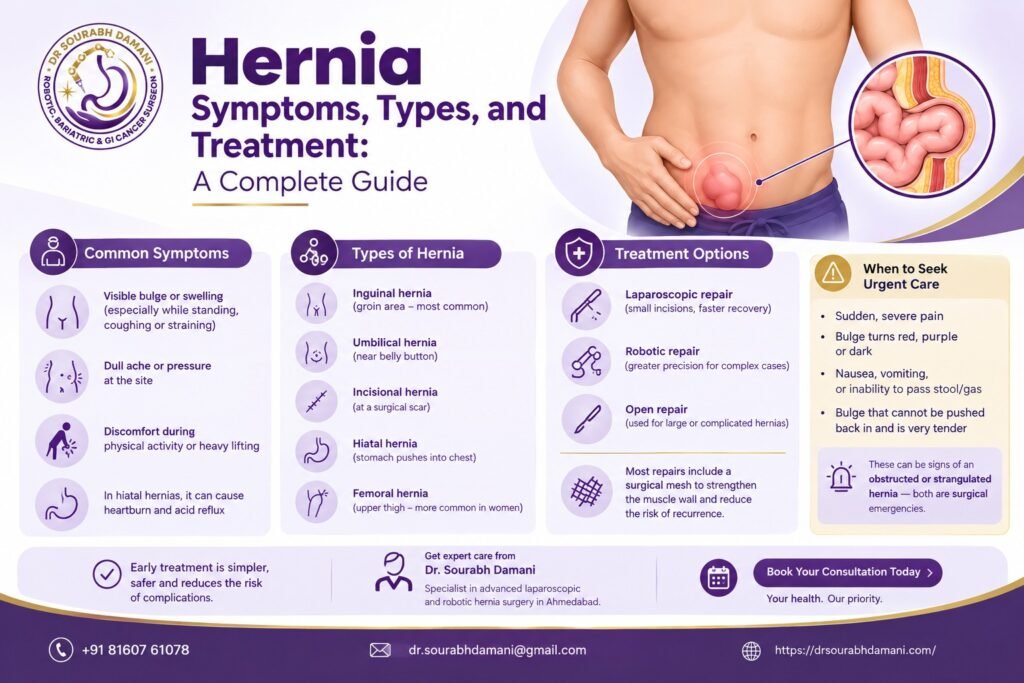
A hernia is one of the most common surgical problems, yet many people ignore it for months, thinking it’s just a lump or minor discomfort. Left untreated, a hernia can grow larger and lead to serious complications. Here’s a simple guide to help you understand what a hernia is, how to spot it early, and what your treatment options are
What Exactly Is a Hernia?
A hernia happens when an internal organ or tissue pushes through a weak spot in the surrounding muscle or connective tissue. Most commonly, this happens in the abdominal wall, causing a visible bulge under the skin.
What Are the Different Types of Hernia?
There are several types of hernia, and knowing which one you have matters for treatment:
- Inguinal hernia – occurs in the groin area; the most common type, especially in men
- Umbilical hernia – appears near the belly button
- Incisional hernia – develops at the site of a previous surgical scar
- Hiatal hernia – occurs when part of the stomach pushes into the chest through the diaphragm.
- Femoral hernia – appears in the upper thigh, more common in women
What Are the Common Symptoms of a Hernia?
Symptoms can vary depending on the type and severity, but the most common signs include:
- A visible bulge or swelling, often more noticeable when standing, coughing, or straining
- A dull ache or pressure at the site of the bulge
- Discomfort that worsens with heavy lifting or physical activity
- A burning or aching sensation around the lump In hiatal hernias, symptoms like heartburn and acid reflux
When Does a Hernia Become a Medical Emergency?
Most hernias grow slowly, but some can become dangerous quickly. Seek immediate medical attention if you notice:
- Sudden, severe pain at the hernia site
- The bulge turning red, purple, or dark in color
- Nausea, vomiting, or inability to pass stool or gas
- A bulge that cannot be pushed back in and is very tender
These can be signs of an “obstructed hernia” where the intestine gets trapped and its passage is blocked — or a “strangulated hernia” where the blood supply to the trapped tissue is cut off. Both are surgical emergencies and need urgent medical attention.
What Causes a Hernia to Develop?
Hernias develop due to a combination of muscle weakness and strain. Common causes include:
- Heavy lifting with poor technique
- Chronic coughing or sneezing
- Obesity
- Pregnancy
- Straining during bowel movements or urination
- Previous abdominal surgery
Can a Hernia Heal Without Surgery?
Unfortunately, no. A hernia does not go away on its own, and it will not heal with medication, exercise, or a hernia belt. These measures may reduce discomfort temporarily, but the only way to permanently repair a hernia is through surgery.
What Are the Treatment Options for Hernia Repair?
Modern hernia treatment is far less invasive than it used to be. The main surgical options are:
- Laparoscopic hernia repair – performed through small incisions using a camera and specialised instruments, offering less pain, minimal scarring, and quicker recovery
- Robotic hernia repair – provides even greater precision, especially useful for complex or recurrent hernias
- Open hernia repair – still used in certain cases, especially very large or complicated hernias
Most repairs also involve placing a surgical mesh to reinforce the weakened muscle wall and reduce the chance of recurrence.
How Long Does Recovery Take After Hernia Surgery?
Recovery depends on the type of hernia and surgical technique used, but with laparoscopic or robotic repair, most patients can:
- Go home within 1–2 days
- Return to light activities within a week
- Resume normal exercise within 4–6 weeks
Should You Get Your Hernia Treated Now?
If you’ve noticed a bulge or persistent discomfort, it’s best not to wait. Early treatment is simpler, safer, and reduces the risk of complications like strangulation.
Dr. Sourabh Damani specialises in advanced laparoscopic and robotic hernia surgery in Ahmedabad. With over 12 years of surgical experience, he offers personalised evaluation and treatment plans to help you recover quickly and safely. Book a consultation today to discuss the right approach for your hernia.