Piles (Hemorrhoids): Symptoms, Causes and Treatment Explained
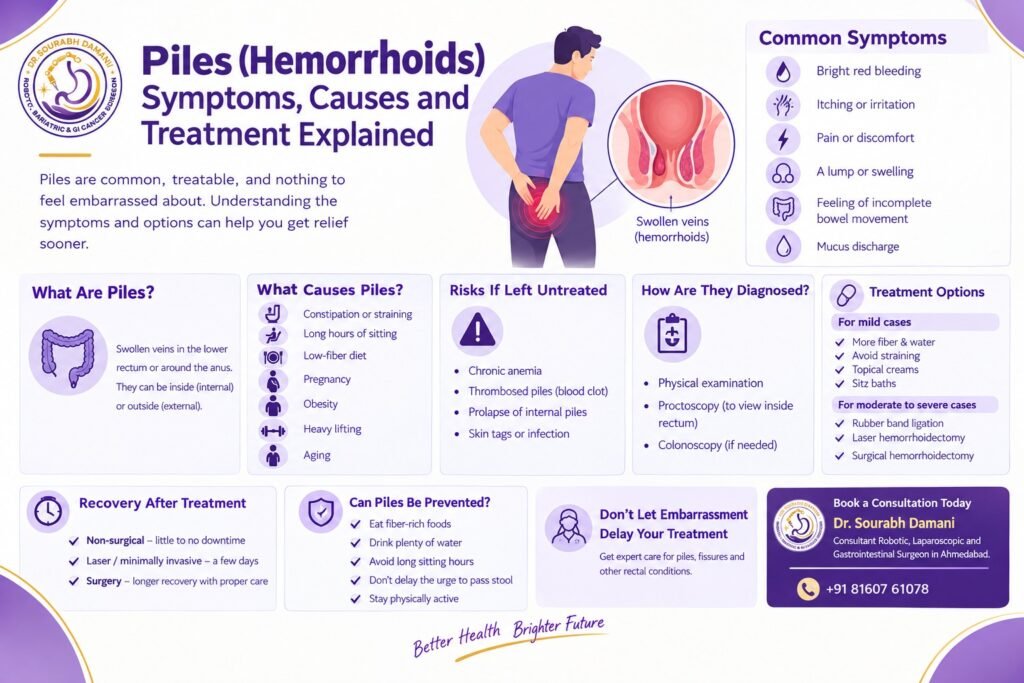
Piles, also known as hemorrhoids, are one of the most common yet least talked about health problems. Many people feel embarrassed to discuss it and end up ignoring the symptoms for months, or even years. But piles are highly treatable, and understanding the condition is the first step toward relief.
What Are Piles?
Piles are swollen veins in the lower rectum or around the anus, similar to varicose veins. They can develop inside the rectum (internal piles) or under the skin around the anus (external piles). While uncomfortable, piles are rarely a sign of anything serious, but they should still be evaluated by a doctor.
What Are the Common Symptoms of Piles?
Symptoms often depend on whether the piles are internal or external, but generally include:
- Bright red bleeding during or after passing stool
- Itching or irritation around the anus
- Pain or discomfort, especially while sitting
- A lump or swelling near the anus
- A feeling of incomplete bowel movement
- Mucus discharge after passing stool
What Causes Piles to Develop?
Piles are usually caused by increased pressure in the lower rectum. Common contributing factors include:
- Chronic constipation or straining during bowel movements.
- Sitting for long hours, especially on hard surfaces
- A low-fiber diet
- Pregnancy
- Obesity
- Heavy lifting
- Aging, which weakens supporting tissue
How Serious Can Piles Get If Left Untreated?
While piles themselves are not dangerous, ignoring them can lead to complications such as:
- Chronic anemia due to repeated bleeding
- Thrombosed piles, which cause severe pain due to a blood clot
- Prolapse, where internal piles push out of the anus
- Skin tags or infection around the anal area
If bleeding continues or pain worsens, it’s important to get an evaluation rather than assume it will resolve on its own.
How Are Piles Diagnosed?
Diagnosis is usually straightforward and can involve:
- A physical examination
- A proctoscopy, where a small instrument is used to view the inside of the rectum
- In some cases, a colonoscopy, especially if bleeding needs to be investigated further to rule out other causes
What Are the Treatment Options for Piles?
Treatment depends on the severity of the condition:
For mild cases:
- Increasing fiber intake and water consumption
- Avoiding straining during bowel movements
- Topical creams or ointments for symptom relief
- Sitz baths for comfort
For moderate to severe cases:
- Rubber band ligation – a non-surgical procedure where a small band cuts off blood supply to the pile, causing it to shrink
- Laser hemorrhoidectomy – a minimally invasive procedure with less pain and faster healing
- Surgical hemorrhoidectomy – recommended for large or prolapsed piles that don’t respond to other treatments
What Does Recovery Look Like After Piles Treatment?
Recovery depends on the type of procedure:
- Non-surgical treatments usually require little to no downtime
- Laser and minimally invasive procedures typically allow return to normal activity within a few days
- Traditional surgery may need slightly longer recovery, with proper diet and care to avoid constipation
What Should You Look for in a Bariatric Surgeon?
Choosing the right surgeon matters as much as choosing the right procedure. Look for:
- Specialised training and certification in bariatric and metabolic surgery
- Experience with laparoscopic and minimally invasive techniques
- A structured post-surgery support programme, including a dietician and follow-up care
Can Piles Be Prevented?
Simple lifestyle changes can go a long way in preventing piles or stopping them from getting worse:
- Eat a fiber-rich diet with fruits, vegetables, and whole grains
- Drink plenty of water
- Avoid sitting for prolonged periods
- Don’t delay the urge to pass stool
- Stay physically active
Don't Let Embarrassment Delay Your Treatment
Piles are common, treatable, and nothing to feel embarrassed about. The longer you wait, the more uncomfortable the condition can become.
Dr. Sourabh Damani provides expert evaluation and advanced treatment for piles, fissures, and other rectal and anal canal conditions in Ahmedabad. Book a confidential consultation today to get the relief you deserve.