Gallbladder Stone Symptoms You Should Never Ignore
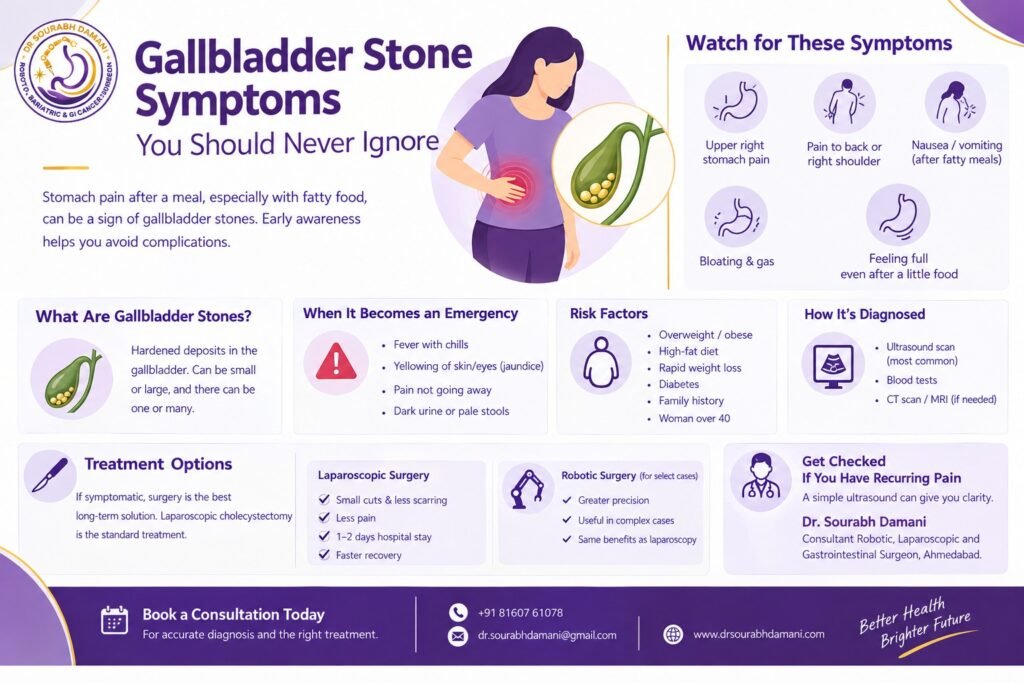
Stomach pain after a meal is something most of us brush off as “just gas.” But if the pain keeps coming back, especially after fatty or oily food, it could be a sign of gallbladder stones. Gallstones are very common in India, and many people live with them for years without knowing. Understanding the early symptoms can help you avoid painful complications later.
What Are Gallbladder Stones?
The gallbladder is a small, pear-shaped organ under your liver. It stores bile, a fluid that helps digest fat. When the chemicals in bile become imbalanced, they can harden into small stones. These stones can be as tiny as a grain of sand or as large as a golf ball, and a person can have one stone or many at the same time
What Are the Early Warning Signs of Gallstones?
Not everyone with gallstones feels pain right away. In fact, many stones stay “silent” for a long time. But when symptoms do appear, they usually include:
- Sudden, sharp pain in the upper right side of the stomach
- Pain that spreads to the back or right shoulder
- Nausea or vomiting, especially after fatty meals
- Bloating, gas, and indigestion
- A feeling of fullness even after eating very little
This pain is often called a “gallbladder attack.” It can last from a few minutes to several hours and tends to come back again and again if left untreated.
When Does Gallstone Pain Become an Emergency?
Some symptoms mean the stone has caused a blockage or infection, and you should not wait to see a doctor. Watch out for:
- Fever with chills
- Yellowing of the skin or eyes (jaundice)
- Pain that does not go away after several hours
- Dark-colored urine or pale, clay-colored stools
If you notice any of these, it is important to visit a gastro surgeon immediately, as the stone may have blocked the bile duct or caused inflammation of the gallbladder.
Why Do Gallstones Form in the First Place?
Several everyday factors can raise your risk:
- Being overweight or obese
- A diet high in fried and fatty food
- Rapid or crash weight loss
- Diabetes
- Family history of gallstones
- Being a woman over 40 (hormonal factors play a role)
Understanding your risk factors can help you make small lifestyle changes to protect your gallbladder health.
How Are Gallstones Diagnosed?
Diagnosis is usually simple and painless. A doctor will typically recommend:
- An ultrasound scan, which is the most common and reliable test
- Blood tests to check for infection or blockage
- In some cases, a CT scan or MRI for a more detailed picture
What Is the Treatment for Gallbladder Stones?
If the stones are not causing symptoms, your doctor may simply monitor them. But if you are having repeated pain or complications, surgery is usually the best long-term solution. The standard treatment is laparoscopic cholecystectomy, a minimally invasive keyhole surgery to remove the gallbladder. Compared to open surgery, it offers:
- Smaller cuts and less scarring
- Less pain after surgery
- Shorter hospital stay (often just 1–2 days)
- Faster return to normal activities
The good news is that the body functions normally without a gallbladder — bile simply flows directly from the liver to the intestine.
Is Robotic Gallbladder Surgery an Option?
Yes. For select cases, especially where the gallbladder is inflamed, has large stones, or where previous surgeries have caused scar tissue, robotic gallbladder surgery is becoming a preferred choice. Using a robotic system, the surgeon operates with a magnified 3D view and highly precise, wrist-like instrument movements, which can be especially useful in complex or high-risk cases.
Benefits of robotic gallbladder removal (robotic cholecystectomy) include:
- Greater precision around delicate structures like the bile duct
- Reduced risk of injury in difficult or inflamed gallbladders
- Same benefits as laparoscopic surgery — small incisions, less pain, and quick recovery
For straightforward gallstone cases, laparoscopic cholecystectomy remains a safe, effective, and widely used option. Your surgeon will help you decide whether a laparoscopic or robotic approach is best suited to your specific case.
Should You Get Your Gallstones Checked?
If you have been experiencing recurring pain after meals, don’t wait for it to get worse. Gallstones are highly treatable when caught early, and a simple ultrasound can give you clarity
Dr. Sourabh Damani is a consultant robotic, laparoscopic, and gastrointestinal surgeon based in Ahmedabad, with over 12 years of experience in advanced gallbladder and biliary tract surgery, including robotic gallbladder surgery for complex cases. If you are dealing with recurring abdominal pain, book a consultation today for an accurate diagnosis and the right treatment plan for you.